 Mirissa Whale Watching Tours
Trincomalee vs Mirissa Whale Watching: Which Coast and Which Month
Trincomalee vs Mirissa whale watching is mostly a question of timing. Mirissa on the south coast sails from November to April, while Trincomalee on the east coast runs roughly March to September or October, with a blue whale peak in June, July and August. This page compares the two coasts, the species each is known for, the crowding reported at both, and what to do if your dates fall between the seasons. No whale sighting on either coast can ever be promised, and the boats sold here are compared on Mirissa whale watching tours.
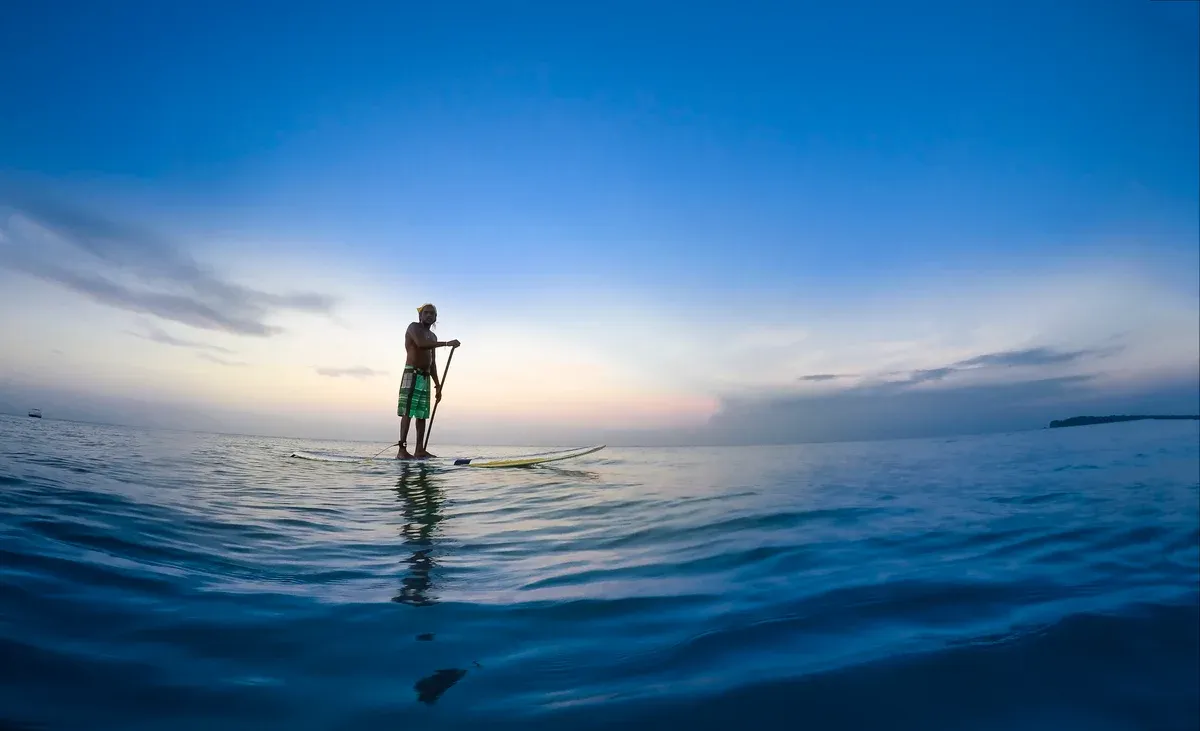
Evening on the water at Trincomalee. Photo: Aditya Siva msaditya9, CC0, via Wikimedia Commons
Quick answer Which coast, which month
Trincomalee vs Mirissa whale watching comes down to dates: Mirissa on the south coast sails November to April, while Trincomalee on the east coast runs roughly March to September or October with a June to August blue whale peak. Choose the coast that matches your month.
Key takeaways
- Travelling November to April? Book a Mirissa boat, such as the Whale Watching Club catamaran at $55.
- Travelling June to August? Trincomalee is the better bet, with July reported as having the calmest seas.
- Stuck in May or October? Read the shoulder months section below before spending money on either coast.
- On the south coast, compare all Mirissa whale watching tours in one table before you pay.
Where Is the Best Whale Watching in Sri Lanka?
Sri Lanka has three main whale watching areas, and the honest answer is that the best one changes with the month.
Three Coasts, One Calendar
The International Whaling Commission's whale watching handbook names three main whale and dolphin watching areas in Sri Lanka: Mirissa in the south-west, Trincomalee in the north-east, and Kalpitiya on the north-west coast. None of them works all year. The monsoons swap roughly every six months, so when the south-west sea turns rough, the east coast calms down, and the other way round.
So the best whale watching in Sri Lanka is wherever the sea is calm when you arrive. From November to April that usually means Mirissa and the south. From roughly March to September or October it usually means Trincomalee. Kalpitiya is a third option the handbook lists, though this guide focuses on the two coasts travellers compare most.
Why Mirissa Works at All
Mirissa's advantage is depth close to shore. The continental shelf drops away only a few kilometres from Mirissa Fisheries Harbour, which puts deep water, and the blue whales that feed in it, unusually close to land. Boats head toward Dondra Point in deeper water, a run of roughly 45-60 minutes from the harbour. Whales are sometimes found up to 20 km offshore, and sperm whales more often 20-40 km out.
Trips leave around 7:00 am with passengers told to arrive 6:00-6:30 am, and typically last 3-5 hours, averaging about 4 hours. The International Whaling Commission profile lists Mirissa, Trincomalee and Kalpitiya as the country's three main areas, which is as close to an official answer as the sources give.
Sources: The Morning, Protecting the sea's gentle giants, whale-watching-mirissa.com
Seasons Compared: Mirissa and Trincomalee
The two coasts overlap only in March and April, and that overlap is the whole story of the Trincomalee vs Mirissa choice.
The Month Table
The table below lines up the two coasts month by month. Figures come from the International Whaling Commission handbook profile, operator and guide sources used here, and each is attributed where it is a claim rather than an official statistic. Notice how little overlap there is.
| Months | Mirissa (south coast) | Trincomalee (east coast) | What it means |
|---|---|---|---|
| November to February | Main season, calmest seas from December | Off-season | Book Mirissa |
| March to April | Season continues, calm to March | Season opening | Either coast |
| May to June | Rough sea, most boats stop | Season, sperm whales most favourable | Go east |
| July to August | Off-season | Blue whale peak, July calmest | Go east |
| September to October | Off-season, some sources start in August | Season winding down | Opportunistic on both coasts |
Mirissa Season Detail
Most sources give Mirissa a main season of November to April. Some extend it to May, and one operator-style guide runs it from August, so the safe claim is that November to April is the peak everyone agrees on. December to March is reported as the best stretch of all, with the calmest seas and the highest whale density. One source puts dolphin sightings on nearly 95% of trips, though that figure comes from a travel blog, not a study.
From May to October the picture flips. One long-standing local guide states plainly that the ocean is rough, whale chances are very low, and the seasickness risk is high, and that most operators discourage bookings in those months. If you are in Mirissa in May, that is the honest expectation.
Trincomalee Season Detail
Trincomalee's season runs roughly March to September or October, which complements Mirissa rather than duplicating it. One east coast guide reports that June, July and part of August offer the best chances for blue whales, with July having the calmest seas, and that May and June are generally most favourable for sperm whales, with resident sperm whales regularly reported off Nilaveli.
These figures come from guides, not from an official statistic, and the same caveat applies on both coasts: operators themselves state whale odds between about 30% and 50% in Mirissa, and no independent study publishes a verified sighting rate for either harbour. What the season tables do tell you reliably is sea state, and sea state decides whether boats sail at all.
Species: What Each Coast Is Known For
Both coasts chase blue whales, but the supporting cast and the timing differ.
Blue Whales on Both Coasts
Blue whales are the headline species in Mirissa, and one long-running operator there lists blue whales most often seen, with sperm, fin, Bryde's and short-finned pilot whales and dolphins also reported, plus killer whales and whale sharks only rarely. Another operator lists a similar spread, adding sei whales, humpback whales, orcas, flying fish, turtles and manta rays.
In Trincomalee, the east coast guides single out blue whales for the June to August peak and sperm whales for May and June, with resident sperm whales regularly reported off Nilaveli. If sperm whales are your priority, the east coast window reported in the guides comes earlier in the year than anything the south offers.
A Resident Population, on Both Coasts
Reporting on Sri Lanka's waters describes the blue whales off the country as a resident, non-migratory population. That matters for the comparison in two ways. First, the same animals face pressure from boats on whichever coast they are near, so crowding is a chronic issue rather than a passing migration event. Second, sightings are reported as declining and attributed to human-caused stress, which is a reason to treat any claimed sighting percentage with caution on both coasts.
Dolphins are a different story. Operators in Mirissa put dolphin odds at 80-90%, and dolphins are the likelier sighting on almost any boat, any month the fleet sails.
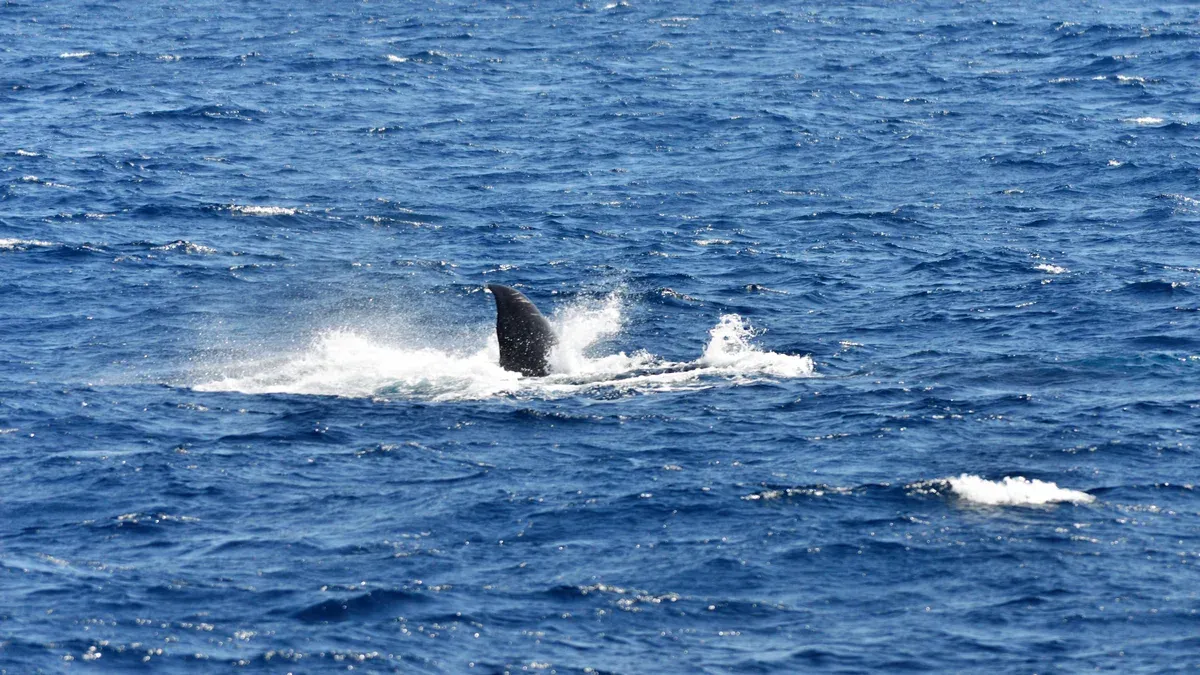
A blue whale dives off Mirissa. Photo: DammikaD, CC BY-SA 4.0, via Wikimedia Commons
Crowding and Rules: The Same Problem on Both Coasts
If one coast had a clean record and the other did not, this comparison would be easy. The research says otherwise.
Crowding Reports
In Mirissa, a first-hand travel account reports around 20 vessels departing one morning and, at one point, 17 vessels around a single blue whale. The same writers describe a two-storey vessel carrying about 80 passengers, and they go as far as recommending travellers skip Mirissa and try Trincomalee or Koggala instead. Captains coordinate sightings by radio and race to arrive first, which produces crowding, view blocking and fast approaches.
In Trincomalee, the crowding research is thinner, but the compliance research is not. The Pearl Protectors found 83% of operators in Trincomalee and 73% in Mirissa engaging in illegal whale-swimming activity. On that measure the east coast scored worse than the south. Whichever coast you choose, the operator matters more than the harbour.
The Rules and the Gap
Sri Lanka's Sea Mammals (Observation, Regulation and Control) Regulations No. 1 of 2012, amended 2019, apply nationwide. Vessels must cut speed from 400 m, switch engines off at 100 m from whales, and never approach closer than 100 m, with a 50 m limit for other marine mammals. Swimming with whales is illegal without written permission from the Director General of the Department of Wildlife Conservation, which is rarely granted.
Enforcement is the weak point. The DWC has acknowledged it cannot monitor every inch of the ocean, and reporting notes operators frequently approach within 2-3 metres despite the 100 m rule. One responsible operator in Mirissa states it keeps a safe distance, never crosses a whale's course and never swims with whales, and the site's own page on ethical whale watching in Mirissa explains what to look for. Violations carry licence revocation, fines and potential imprisonment, and the public can report them on hotline 1992 or by email to [email protected].
Getting There: Mirissa vs Trincomalee
Access is one of Mirissa's real advantages, and it should be part of the comparison.
Reaching Mirissa
Mirissa sits about 150 km south of Colombo at 4 m elevation, in Matara District. Road distance runs about 147-171 km depending on route, roughly 2-3 hours by car via the Southern Expressway, or under 2 hours in light traffic on the expressway alone. The town is about 13 km from the Kokmaduwa interchange and about 40 km from Galle along the coastal road. The train on the Coastal or Southern Line takes about 3-3.5 hours, with the station about 2 km from the town centre.
Boats sail from Mirissa Fisheries Harbour, the largest fishing port on the south coast. Practical notes and route options are on the page about Colombo to Mirissa for whale watching.
Reaching Trincomalee
The sources used here do not give distances, drive times or transport fares for the road or rail route to Trincomalee, so none are quoted here. What can be said is the shape of the decision: Trincomalee sits on the north-east coast, and for most travellers on the southern beach circuit of Galle, Weligama and Mirissa it is a separate leg of the trip, not a day trip. Weligama is only about 3.2 km from Mirissa, which shows how compact the south coast strip is compared with an east coast journey.
If your itinerary keeps you in the south, that alone settles the Trincomalee vs Mirissa question in season, because a Mirissa boat such as the private speed boat trip at $550 for the whole boat needs no long transfer at all.
What a Trip Costs: Mirissa Prices, Trincomalee Not Stated
One honest limit of this comparison: no tour on this site sails from Trincomalee, so no Trincomalee price is published here.
Mirissa Prices in One Place
No tour listed on this site operates from Trincomalee, so there is no Trincomalee price to quote and none is invented. For Mirissa, the table below shows the listed prices of the Mirissa whale watching tours compared on this site, together with each listing's note on the harbour entry ticket, which is the extra that turns a headline price into the real price.
| Mirissa trip | Listed price | Harbour ticket |
|---|---|---|
| Believe It Tours breakfast boat | $28 | Optional add-on |
| Geeth's Crew | $32 | Add-on or pay at the harbour |
| Eagle Eye trimaran | $50 | Included |
| Whale Watching Club catamaran | $55 | Not stated |
| Chaminda cruiser | $65 | Not stated |
| All inclusive boat ride | $90 | Included |
| Whale and turtle combo | $92 | Not stated |
| Private speed boat | $550 per boat | Extra, about $19-20 per person |
The Harbour Ticket
Several budget listings leave the harbour entrance ticket out of the base price. Geeth's Crew at $32 says the entry ticket is an add-on at checkout or payable at the harbour that morning. Believe It Tours at $28 makes it optional at checkout. The private speed boat adds a harbour entrance fee of about $19-20 per person, paid at check-in. By contrast, Eagle Eye at $50 states all fees and taxes are in the price, and the Ceylon Pass trip at $90 names the animal welfare ticket among its inclusions.
Aggregated reporting puts shared-boat tickets anywhere from LKR 8,000-20,000, roughly $25-65, depending on operator, season and inclusions. The dedicated page on the Mirissa whale watching price breaks the real cost down line by line.
If You Are in Sri Lanka in the Shoulder Months
May and October are the awkward months, one on each side of the two seasons.
May and Early June
May is the hinge. The main Mirissa season is closing, the seas off the south-west are turning rough, and one long-standing local guide says directly that from May to October it is not worth going, with very low whale chances and a high seasickness risk. At the same time, the east coast guides report May and June as generally the most favourable months for sperm whales off Trincomalee, with resident sperm whales regularly reported off Nilaveli. If your dates fall in May, the comparison points east.
Expect no discounts to soften this: an off-season price cut of 10-20% below peak is reported for May to October, but a cheap ticket on a rough sea with low odds is still a poor buy, and refund policies are built around cancellation windows, not around whether whales appear.
September and October
The other shoulder runs the other way. Trincomalee's season winds down around September or October as the east coast sea state deteriorates, while Mirissa's boats have not yet started in numbers. Sources extend the Mirissa season back to August, but the peak everyone agrees on is November to April.
In September or October the honest advice is to treat a whale trip as opportunistic. If a licensed operator is sailing and the morning is calm, dolphins at 80-90% per operator claims are the realistic target, and a turtle snorkeling combo tour at $92 gives you a second species to fall back on. If the forecast is rough, wait for the calendar rather than gambling on the sea.
Which Coast Should You Choose?
Match the coast to your month and your route, not to a promise of a whale.
If You are in Sri Lanka from November to April
Book on the south coast. Compare the Mirissa whale watching tours by price, boat size and the operator's own stated odds before paying.
If You are in Sri Lanka in June, July or August
Trincomalee is the seasonal match, with June to August reported as the blue whale peak and July the calmest month. No tour on this site sails from there, so book locally on the east coast.
If You want the best chance of sperm whales
Guides point to May and June off Trincomalee, with resident sperm whales regularly reported off Nilaveli. That window sits after Mirissa's season fades.
If You are in Mirissa in the May to October off-season
Expect rough seas, very low whale chances and a high seasickness risk per the sources. Wait for the season or read Mirissa whale watching season for the month-by-month detail.
If You want the least crowded option
No coast has a clean record. Crowding of up to 17 vessels around one whale is documented in Mirissa, and illegal whale-swimming was reported at 83% of Trincomalee operators and 73% in Mirissa. Pick the operator, not the harbour.
If You keep your trip on the southern beach strip
Mirissa wins on logistics. It is about 2-3 hours from Colombo by expressway and boats leave from the harbour in town, so an early 7:00 am start is easy.
Questions About Trincomalee vs Mirissa
Is Trincomalee good for whale watching?
It is the right coast for the months Mirissa cannot serve. The season runs roughly March to September or October, with June to August reported as the blue whale peak and May and June the best months for sperm whales off Nilaveli. The caveat is compliance: research cited by The Pearl Protectors found 83% of Trincomalee operators engaging in illegal whale-swimming, so vet the operator hard. See also the notes on ethical whale watching in Mirissa for what good practice looks like.
Where is the best whale watching in Sri Lanka?
Wherever the sea is calm in your month. The International Whaling Commission handbook lists Mirissa in the south-west, Trincomalee in the north-east and Kalpitiya on the north-west coast as the country's three main areas. For a November to April trip that usually means Mirissa, and you can compare Mirissa whale watching tours side by side before booking.
Can you see whales in Mirissa in the off-season?
Sometimes, but the odds are against you. Sources covering the south coast state that from May to October the ocean is rough, whale chances are very low and the seasickness risk is high. If you sail anyway, operators themselves put whale odds far below their peak-season claims, with dolphins at 80-90% the likelier sighting.
Which coast has more crowded whale watching?
Crowding is documented in Mirissa, with reports of up to 17 vessels around a single blue whale and boats of about 80 passengers, and captains racing to sightings by radio. Trincomalee has fewer crowding accounts in the research, but scored worse on the illegal whale-swimming measure at 83% of operators versus 73% in Mirissa. On both coasts, the operator and its stated code of conduct matter more than the harbour.
Do the whales migrate between the two coasts?
On neither coast is it a passing migration. Sri Lanka's blue whales are described as a resident, non-migratory population, which is why both coasts can claim a season and why boat pressure is a chronic problem. What changes through the year is sea state, which is why the season table, not the whales, should drive your choice.
Are there whale watching tours from Trincomalee on this site?
No. Every boat trip compared on this site sails from Mirissa Fisheries Harbour on the south coast, so no Trincomalee operator or price is listed here. For the November to April season, browse the full Mirissa whale watching tours catalogue with listed prices from $28 to $550.