 Mirissa Whale Watching Tours
Seasickness on Mirissa Whale Watching Trips
Seasickness on Mirissa whale watching trips is the single most common complaint, and it is avoidable if you plan for it. This page explains why the boats roll, who is most at risk, what the pills are called and when to take them, where to sit, what to eat, and which boat types feel steadier. We compare Mirissa whale watching tours as an independent site, so the advice here comes from operators' own listings and travel sources, not from selling you a ticket. The boats themselves are compared on Mirissa whale watching tours.
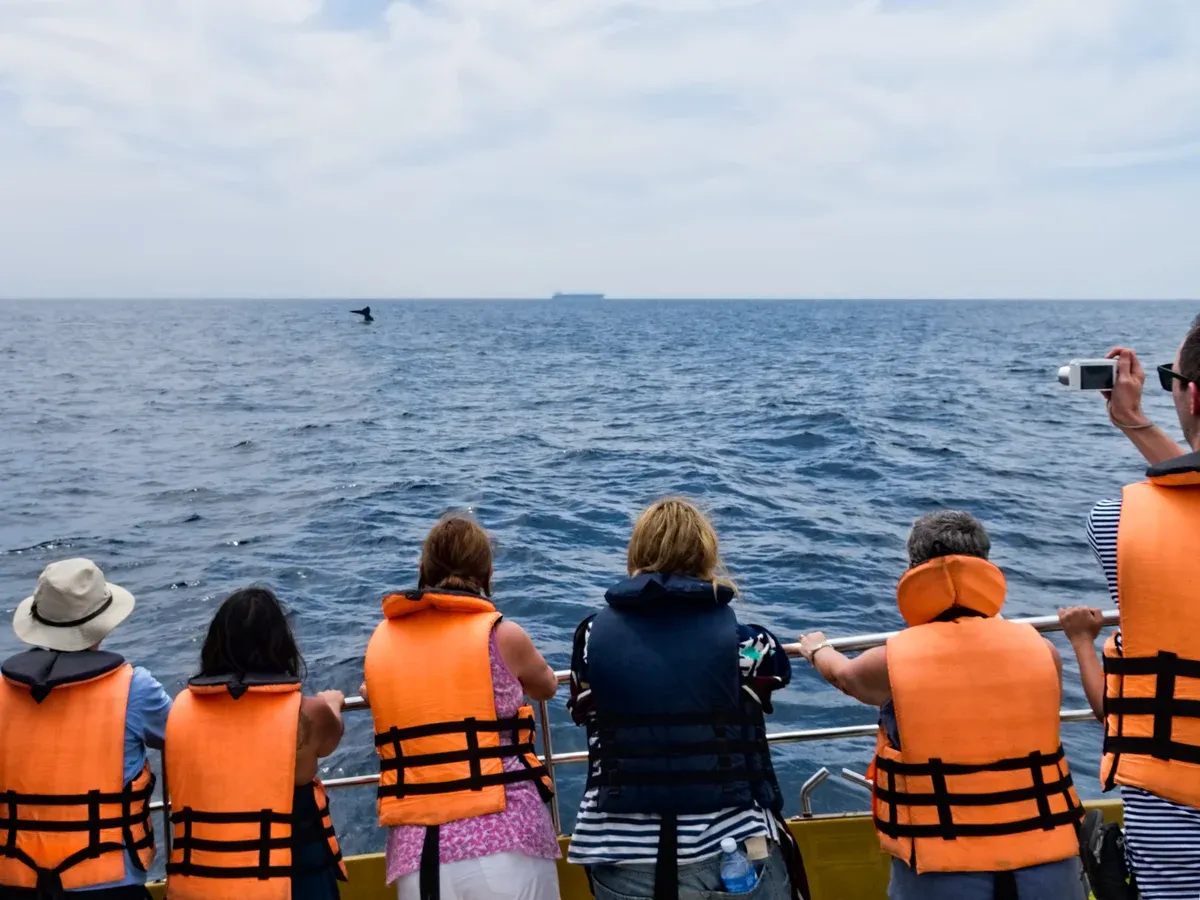
Passengers watch a blue whale dive far off the bow. Photo: Dan Lundberg, CC BY-SA 2.0, via Wikimedia Commons
Quick answer Seasickness quick answer
Yes, seasickness on Mirissa whale watching is a real risk: boats travel 45-60 minutes through open water to reach the whale grounds off Dondra Point, and trips last 3-5 hours on average.
Key takeaways
- Take a seasickness pill such as Avomine 1-2 hours before boarding, and ask a pharmacist in Sri Lanka about the right dose for you. Details in the pills section.
- The 60 ft Queen Whale Catamaran with a 55 guest cap feels steadier than small boats, and its operator prints honest odds of about 50% for whales.
- The private speed boat trip reaches the whale grounds in under an hour, which cuts the time you spend rolling.
- Skip the off-season. From May to October the sea is rough, most boats stop sailing, and one Mirissa source puts seasickness risk at its highest then.
Why Mirissa Boats Roll So Much
Mirissa has calm mornings and then open ocean, and the difference is what makes people sick.
The Run Out To Deep Water
Boats leave Mirissa Fisheries Harbour around 7:00 am, with passengers told to arrive between 6:00 and 6:30 am. The harbour itself is sheltered, so the first minutes feel easy. Then the boats head toward Dondra Point in deeper water, a journey of roughly 45-60 minutes. The continental shelf drops away only a few kilometres from the harbour, which is why the whales are close, but it also means you cross open swell with nothing to break it.
Once out there, the boat often sits with engines off while the crew watches for blows on the horizon. A stationary boat in swell rolls side to side more than a moving one, and that idle rolling is when most people start to feel ill. Whales can be found up to about 20 km offshore, and sperm whales are usually reported 20-40 km out, so a long slow search is possible.
The Season Decides How Rough It Gets
The main season is November to April, and December to March has the calmest seas and the highest whale density per one travel guide. In season, mornings are usually workable even for nervous sailors. From May to October the situation changes completely. One long-standing Mirissa operator puts it bluntly: the ocean is rough, whale chances are very low, and the chances of getting seasickness are very high. Most boats stop sailing in that window.
If you are worried about your stomach, book inside the peak. A rough-sea trip in the off-season is the worst possible combination, because you will likely be both sick and whaleless. Our guide to the Mirissa whale watching season has the month by month picture.
Sources: The Morning, Protecting the sea's gentle giants, whale-watching-mirissa.com
Who Gets Sick And When To Cancel
Some people should think twice before booking, and some should not book at all.
Children And Pregnant Travellers
Operators and family travel guides commonly suggest a minimum age of around 5-7 years for children, citing seasickness risk and a trip that runs 3-5 hours on average. At least one tour in Mirissa is explicitly not suitable for children under 10. If your child has never been on a boat, a shared 4-hour trip in swell is a hard first test.
Pregnant travellers are advised to consult their doctor before booking and to tell the operator before departure. Some tours state outright that they are not suitable for pregnant passengers. Also note that the blue whale and turtle snorkeling combo is not for anyone who gets badly seasick, since it adds 1.5 hours of snorkeling after 2.5-4 hours on the boat.
When Not To Go At All
If you get severe motion sickness even on buses, a Mirissa whale watching trip will be a long morning. There is no shore option and no early exit in most cases. Some operators do not refund passengers when no whales are seen, and refund policies are generally built around cancellation windows of 24-48 hours, not around whether whales appeared.
That cancellation window is your safety valve. If you wake up genuinely unwell, cancel inside the allowed window rather than boarding and suffering for 4 hours. Check each listing's cancellation terms before you pay, and read the operator's own odds on our price and harbour fee page so you know what a no-show day actually costs you.
Should You Go Whale Watching in Mirissa?
An honest account of the swell and the wait on a Mirissa boat. Third-party video by Moritz. We did not shoot it and have no relationship with the creator.
Pills, Timing And What To Eat
The single most effective move is taking the right pill at the right time.
Which Pill And When
Travel sources for Mirissa name Avomine as the recommended seasickness pill, and say to take it 1-2 hours BEFORE you board, not when you already feel sick. Avomine is sold in Sri Lankan pharmacies, so buy it the day before rather than at dawn. Ask the pharmacist to confirm the dose is right for you, especially for children or if you take other medication. We give no medical dosing advice here.
Timing matters because these pills need to be in your system before the rolling starts. If you take one at the harbour at 6:30 am for a 7:00 am departure, you are late. Set an alarm, take the pill at your guesthouse, then walk to the harbour.
Some fares include the pills anyway. At least one Mirissa operator lists seasickness pills among its private-boat fare inclusions, alongside breakfast and passenger insurance. It never hurts to ask when you book.
Food, Drink And The Breakfast Pack
Do not board on a completely empty stomach, and do not board after a heavy dinner. Light and plain is the rule. Most shared trips serve morning tea before departure and a breakfast package during the tour, typically a sandwich, cake, fruit and water on the way out, with a snack on the way back. Eat a little of it and keep water going.
Things that make it worse: strong coffee, alcohol the night before, greasy food, and staring down at a phone. Things that help: fresh air on deck, the horizon, staying busy talking to people, and sitting mid-boat where the motion is smallest. If you start to feel ill, move outside immediately. Below deck is the worst place on any boat.
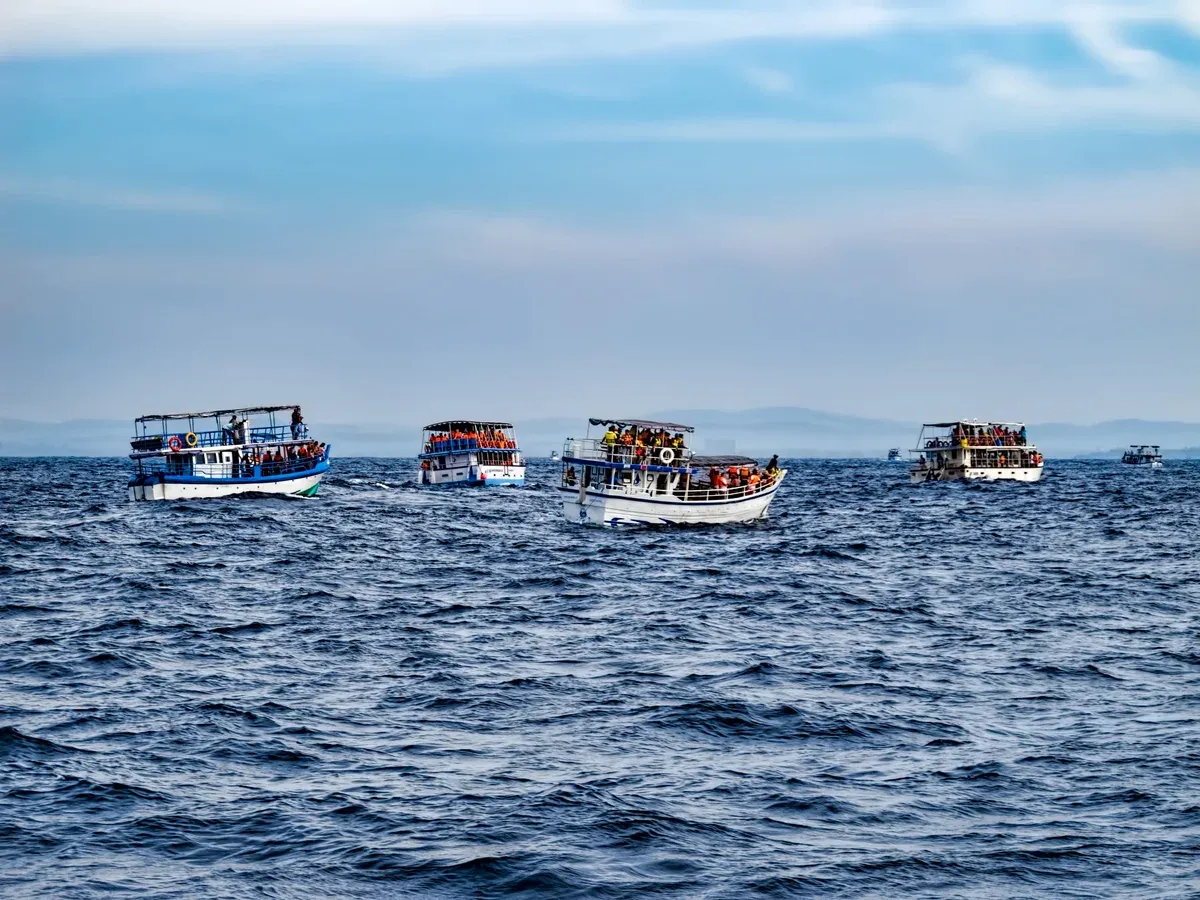
Whale watching boats off the southern tip of Sri Lanka. Photo: Dan Lundberg, CC BY-SA 2.0, via Wikimedia Commons
Which Boats Feel Steadiest
Not all Mirissa boats move the same way, and your choice of boat matters as much as your pills.
Comparing Hulls, Group Sizes And Time At Sea
The figures below come from each tour's own listing. Bigger, wider hulls with a lower guest density generally feel steadier than small boats, and less time in transit means less time to get sick. All shared trips run 3-5 hours on average, so the run out to Dondra Point is the vulnerable window.
The 60 ft Queen Whale Catamaran takes up to 55 guests and its captain has 13 seasons on these grounds. The Super Grade Cruiser is a big two-deck boat with up to 40 travellers per booking, and note that its operator claims a 99.9% sighting rate, a marketing figure, not an independent statistic. The private speed boat cuts transit to under an hour for your group alone.
How the Listings Compare
Figures are from the tour listings themselves, comparing group size, duration, price and what each listing says about fees and pickup. Prices are the listed tour prices and do not include any separate harbour entry ticket where the listing names one.
| Tour | Price | Boat and group | Duration | Steadiness note |
|---|---|---|---|---|
| Queen Whale Catamaran | $55 | 60 ft catamaran, up to 55 guests | 5 hours | Wide twin hull, meet at the office, no pickup |
| Super Grade Cruiser | $65 | Big cruiser, up to 40 per booking | 4 hours | Two decks, breakfast and pickup included |
| Eagle Eye Trimaran | $50 | Trimaran, up to 70 per booking | 4 hours | All fees and taxes stated as included |
| Private Speed Boat | $550 per boat | 12 seats, your group only | 3 hours | Whale grounds in under an hour, harbour fee about $19-20 per person extra at check-in |
The Harbour Ticket, Again
Several budget listings leave the harbour entrance ticket out of the headline price, so check before you assume. The Geeth's Crew trip at $32 adds the entry ticket at checkout or at the harbour, and the private speed boat adds about $19-20 per person at check-in. Our full price and harbour fee breakdown shows which fares include it.
None of this changes how the boat moves, but a surprise fee at the dock on a queasy morning is the last thing you want.
What Seasick Travellers Actually Report
Reviews and first-hand accounts agree on where the misery happens.
The Wait Is The Worst Part
First-hand accounts describe long waits with engines off. One blog documenting a full-day style trip reported expecting 2+ hours before the first whale sighting on a 6+ hour outing, which is a lot of idle time in swell. Crowding makes it worse. One visiting writer counted as many as 17 vessels around a single whale, on a two-storey vessel carrying about 80 passengers. Packed decks, diesel fumes and people leaning over rails do not help fragile stomachs.
The practical takeaway is to pick boats that cap numbers and to get outside early. On the catamaran, 55 guests on a 60 ft hull is a far better ratio than 80 on a loaded double-decker. Smaller crews like Geeth's run shared boats too, though its operator puts whale odds at about 30%, the most conservative published figure in Mirissa, so weigh stomach comfort against how much you want that guarantee of effort. No operator can promise a whale, and operators' own claims range from about 30% to 50% up to one 99.9% marketing claim.
Do And Don't For A Calm Stomach
A short list that covers the whole morning.
Do
- Do take Avomine or an equivalent 1-2 hours before boarding, because the pill needs a head start on the swell.
- Do ask a Sri Lankan pharmacist to confirm the dose for you or your children, because we publish no dosing advice.
- Do book a wide catamaran or cruiser, because hull width and a 40-55 guest cap beat a packed small boat.
- Do stay on deck in fresh air facing the horizon, because the horizon is what your inner ear wants to see.
- Do check the cancellation window, usually 24-48 hours for a full refund, in case you wake up too ill to sail.
Don't
- Don't sail in the off-season, because from May to October the sea is rough and one Mirissa source calls seasickness risk very high.
- Don't board with an empty or overfull stomach, because both extremes make nausea worse.
- Don't sit below deck or stare at your phone, because enclosed spaces and screens accelerate seasickness.
- Don't book the snorkeling combo if you get badly seasick, because the listing says it is not for anyone who does.
Seasickness Questions
Will I get seasick on a Mirissa whale watching trip?
It depends on the day and on you. Trips run 3-5 hours on average with a 45-60 minute open-water run to Dondra Point, and in season the mornings are usually manageable. A pill taken 1-2 hours before boarding, as our pills and timing section explains, prevents it for most people.
What seasickness pills should I take in Mirissa?
Travel sources name Avomine, taken 1-2 hours before boarding and sold in Sri Lankan pharmacies. Ask the pharmacist to confirm the dose. At least one operator includes seasickness pills in the fare, and a larger boat such as the Queen Whale Catamaran gives you room to move out into the fresh air.
Is Mirissa whale watching rough?
Less so in season, when most mornings are workable, with December to March cited as the calmest and best period. From May to October the ocean is rough and most boats stop, so the honest answer is that the season you choose matters more than your stomach does.
Which boat is best if I get seasick easily?
A wide, big-capacity hull is your friend. The Super Grade Cruiser takes up to 40 travellers per booking with two decks and breakfast, or the 60 ft catamaran caps at 55 guests. The private speed boat is fastest out to the grounds, under an hour, though it adds a harbour fee of about $19-20 per person at check-in.
Can children take the trip if they get carsick?
Guides commonly suggest ages 5-7 as a minimum because of seasickness risk and the 3-5 hour length, and one tour excludes children under 10 entirely. If your child is prone to motion sickness, read our who gets sick section and consider whether a shorter, steadier boat is worth the extra cost.
I am pregnant. Is the boat trip a good idea?
Travel advice for Mirissa says pregnant travellers should consult a doctor before booking and inform the operator before departure, and some tours state they are not suitable for pregnant passengers. Check the Mirissa whale watching tours for each operator's own restrictions before paying.
If I get sick and we turn back, do I get a refund?
Not automatically. Refunds are generally tied to cancellation windows of 24-48 hours, not to how you felt at sea, and at least one major operator states it does not refund no-sighting trips. The safest protection is cancelling in advance if you feel too unwell to sail.